


Featured18 Sept 2026
Website Development Cost
A practical 2026 pricing guide for businesses

Hitesh Mistry
18 Sept 2026 • 12 min read
If you are planning to start selling products online, one of the first questions is usually: how much does an e-commerce website cost in Ahmedabad?
The answer depends on much more than the number of products you want to sell.
An online store is a complete transactional system involving product management, inventory, payments, shipping, taxes, customer accounts, emails, security, order management and mobile checkout experience.
A small store selling 20 straightforward products can therefore have a very different development scope from a store with hundreds of products, variations, filters, loyalty programs, OTP login, advanced shipping or ERP integration.
This guide explains the typical e-commerce development price ranges businesses can use for initial planning, what affects those ranges, and what you should consider before selecting an e-commerce platform or developer.
The following figures are indicative planning ranges, not fixed quotations. Actual development cost depends on the platform, UI/UX, number and complexity of products, integrations and required workflows.
| E-commerce Type | Indicative Range | Suitable For |
|---|---|---|
| Starter Online Store | ₹35,000 – ₹60,000 | Smaller catalog and standard shopping functionality |
| Professional WooCommerce Store | ₹50,000 – ₹1,00,000 | Growing brands requiring customized design and functionality |
| Advanced E-commerce Website | ₹80,000 – ₹2,00,000+ | Complex catalogs, custom workflows and integrations |
| Custom Commerce Platform | Scope-based | Specialized business models and application-level requirements |
These ranges can overlap because two stores with the same number of products can still have completely different functional requirements.
Suppose Store A has 100 simple products. Store B has only 30 products, but every product has multiple sizes, colours, conditional pricing, personalization and shipping rules.
Store B may require considerably more development work despite having fewer products.
That's why a proper e-commerce quotation should consider the entire purchase journey rather than simply quoting according to the number of products.
Your choice of platform affects development cost as well as future operating expenses.
Common options include:
WooCommerce provides significant flexibility and control within WordPress. Shopify provides a more managed commerce environment. Custom development is generally considered when the business model requires workflows that standard platforms cannot efficiently support.
For a detailed comparison, read my WooCommerce vs Shopify for Indian Small Businesses guide.
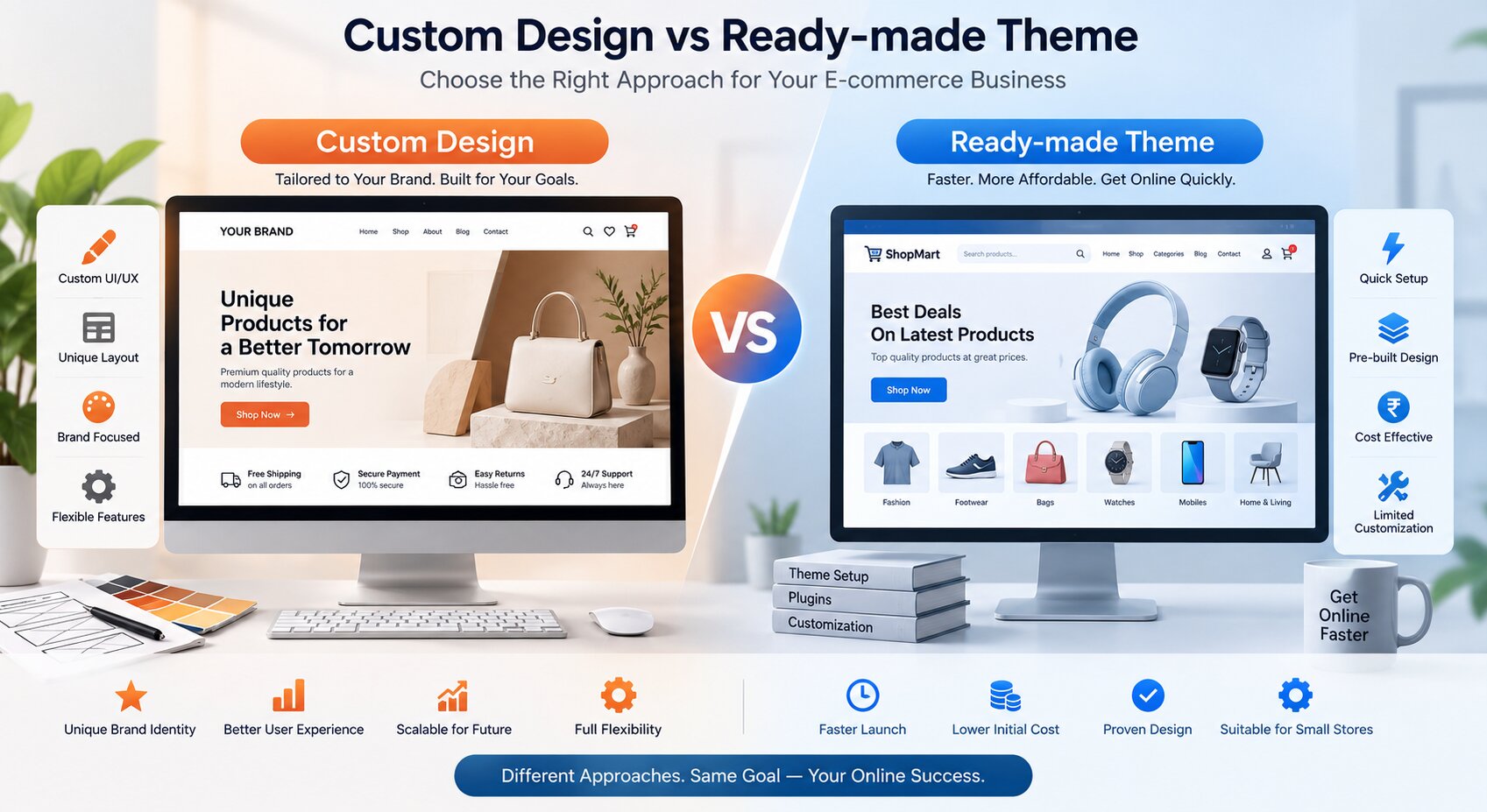
A pre-built e-commerce theme can reduce initial development effort, but it also determines much of the store's visual structure and customer experience.
A custom-designed store requires additional UI/UX effort but allows important journeys such as product discovery, product detail pages, cart and checkout to be designed around the brand and its customers.
Product complexity has a significant impact on development.
Consider whether your store requires:
The more complex the product model, the more carefully product pages, inventory and checkout need to be configured.
Indian e-commerce stores commonly need online payment functionality along with options such as Cash on Delivery where appropriate.
Payment integration isn't only about displaying a payment button. The complete flow should handle successful payments, failures, abandoned attempts, order status updates and customer communication correctly.
Payment providers may also charge their own transaction or service fees. These are separate from website development charges and should be verified directly with the chosen provider.
Shipping can range from a simple flat charge to a complex set of rules.
Your store may require:
These requirements should be identified before development begins.
Tax requirements should be discussed according to your business model, products and applicable tax treatment.
The website may need to support tax display, invoices or location-dependent calculations. Your developer can implement the required technical configuration, while tax treatment itself should be confirmed with your accountant or tax professional.
I help businesses plan and build e-commerce experiences around products, customers and operational requirements.
Once your catalog grows, customers need efficient ways to find relevant products.
That can include:
Advanced filtering may require additional development or specialized extensions.
Standard e-commerce accounts generally allow customers to review orders and manage basic account information.
More advanced stores may require:
Every additional workflow adds development, integration and testing requirements.
A growing e-commerce business may need customers to submit return, exchange or cancellation requests through their account rather than handling everything manually through calls and messages.
This can require dedicated workflows for eligibility, approval, status tracking, refunds and notifications.
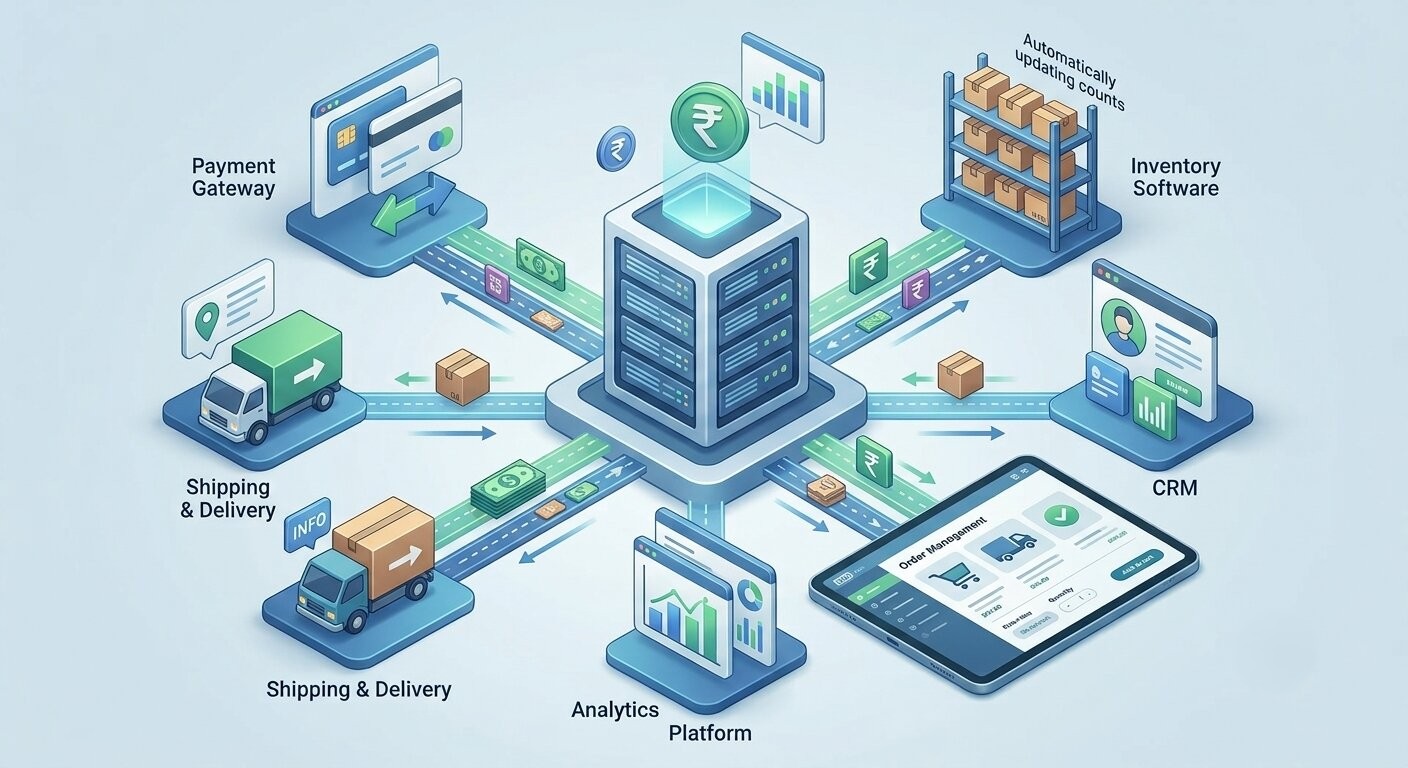
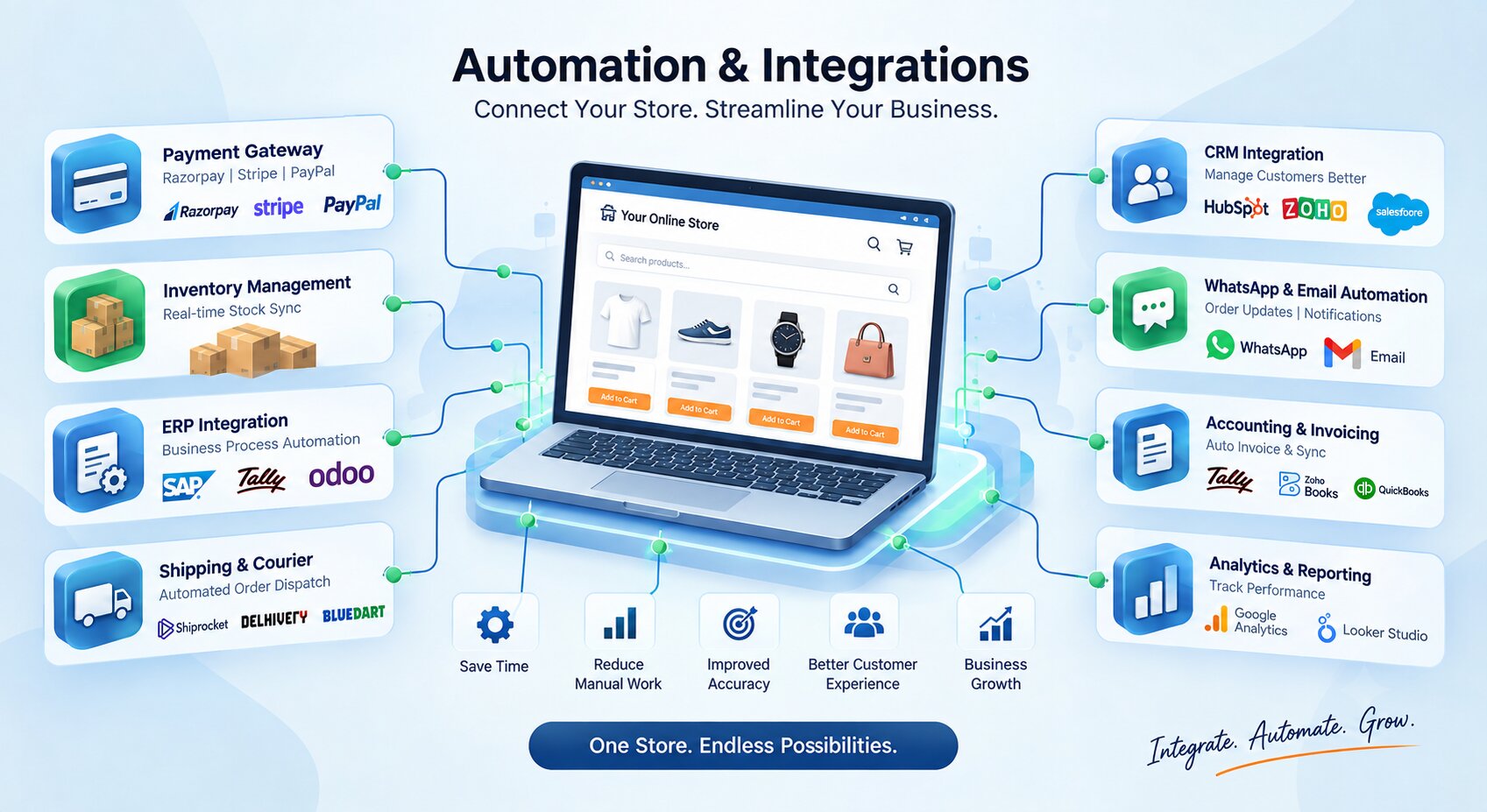
E-commerce becomes significantly more powerful when repetitive processes are automated.
Depending on the business, integrations might include:
Integration complexity can significantly affect the project range.
A professionally implemented store needs the complete purchasing journey to work reliably.
That journey can include:
Landing Page → Category → Product → Cart → Checkout → Payment → Order Confirmation → Fulfilment → Post-purchase Communication
A problem at any stage can reduce conversions or create operational issues.
Development should therefore account for the entire journey rather than only the visual storefront.
Besides development, businesses should plan for possible ongoing costs such as:
Some of these are recurring third-party expenses and are not normally part of the one-time development cost.
Yes, and for many small businesses this can be the most practical approach.
You might initially launch with:
Then add loyalty, referrals, automation, advanced search or integrations after the store starts generating enough operational data to justify them.
The important thing is to select an architecture that can reasonably accommodate future requirements.
A relatively straightforward online store may fall around the ₹35,000–₹60,000 range, while stores requiring custom design, advanced functionality or integrations can require a higher investment.
A professional WooCommerce implementation may broadly range from approximately ₹50,000–₹1,00,000 or more depending on design, catalog complexity, extensions, integrations and custom functionality.
The answer depends on the project. WooCommerce itself does not charge a recurring platform subscription, but hosting, extensions and maintenance can carry costs. Shopify includes managed infrastructure but uses subscription plans and may require paid apps. Compare total ownership cost rather than only initial development.
Technical integration may be included in a development scope, but transaction charges and provider-specific fees are separate and determined by the payment provider.
Yes. A properly configured e-commerce CMS should allow your team to add and manage products after launch.
Yes. However, the redesign should carefully consider existing product URLs, customer data, orders, SEO and integrations before migration or structural changes are made.
E-commerce website development cost in Ahmedabad varies because every store has a different combination of products, operations, integrations and customer journeys.
Instead of starting with the question, "What is the cheapest way to build an online store?", start with "What does our customer need to successfully discover, evaluate and purchase our products?"
Once that workflow is clear, you can select the right platform, prioritize features and establish a much more realistic development budget.
Share this article:


UI/UX Designer, Full-Stack Developer and Digital Experience Consultant with over 10 years of professional experience in helping businesses succeed online.
A practical 2026 pricing guide for businesses

Compare cost, control, customization and maintenance before choosing your e-commerce platform

What businesses actually need after their website goes live
— LET'S BUILD SOMETHING
Let's map your product catalog, payments, shipping, customer journey and integrations to define the right e-commerce scope and investment range.
