


Featured18 Sept 2026
E-commerce Website Cost
A practical 2026 guide to online store development costs

Hitesh Mistry
18 Sept 2026 • 16 min read
If you're planning an online store in India, WooCommerce vs Shopify is likely to be one of the first platform comparisons you encounter.
Both platforms can be used to build professional e-commerce stores, but they approach e-commerce very differently.
WooCommerce is an e-commerce system built on WordPress. It gives businesses substantial control over their website, hosting, code and extensions.
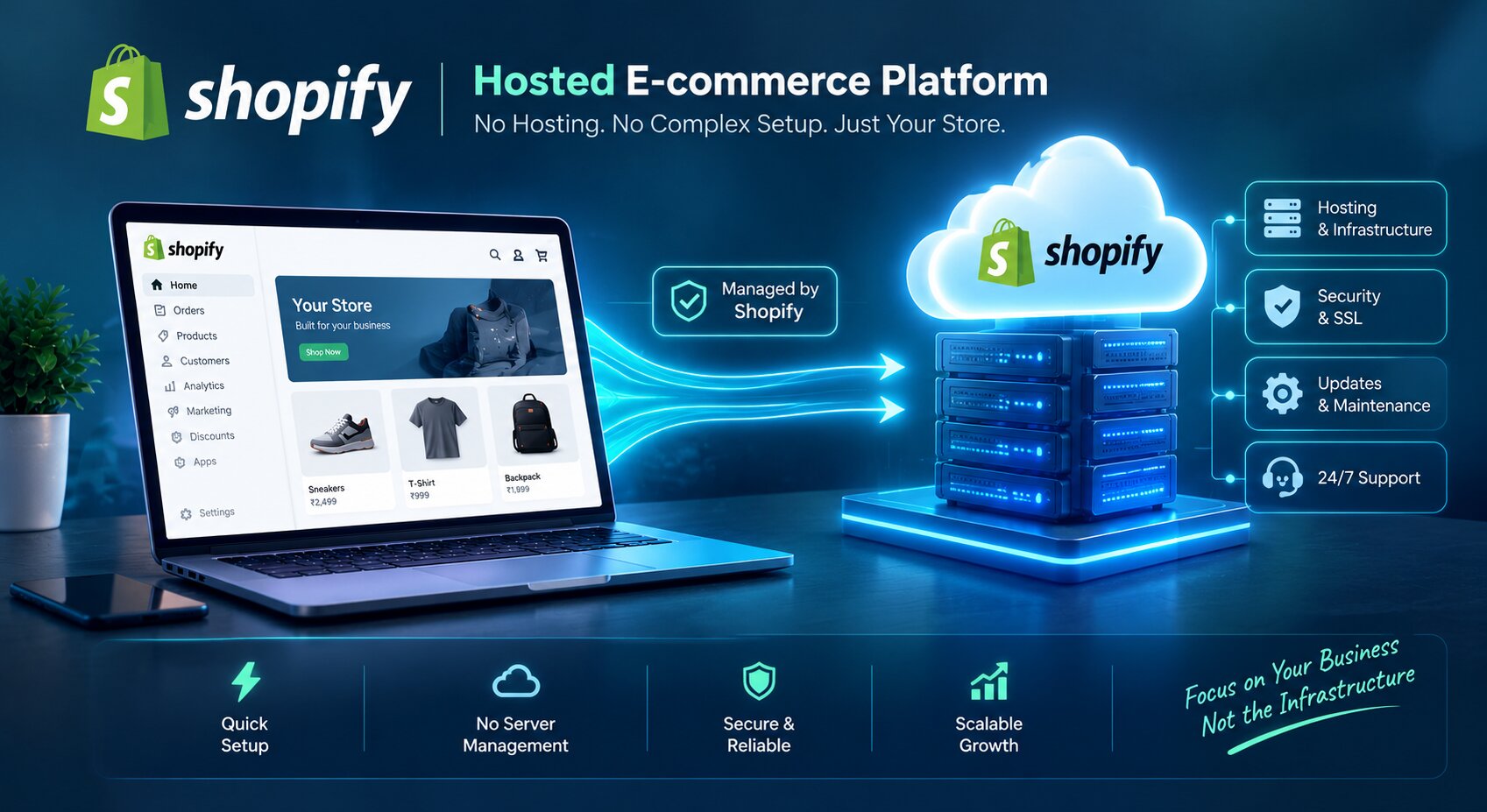
Shopify is a hosted commerce platform. Hosting and much of the technical infrastructure are managed within Shopify's ecosystem.
Neither approach is automatically the correct choice for every Indian small business.
The right decision depends on your products, budget, technical requirements, customization, internal team and long-term plans.
This guide compares WooCommerce and Shopify from a practical Indian small-business perspective.

| Factor | WooCommerce | Shopify |
|---|---|---|
| Platform Type | Self-hosted WordPress e-commerce | Hosted e-commerce platform |
| Hosting | You choose and manage hosting | Managed within Shopify |
| Platform Subscription | No separate WooCommerce core subscription | Recurring Shopify plan |
| Customization | Very flexible | Flexible within Shopify architecture |
| Maintenance | Business/developer manages WordPress environment | Core infrastructure managed by Shopify |
| Content Management | Strong WordPress content ecosystem | Built-in content management |
| Extensions | WordPress/WooCommerce plugin ecosystem | Shopify App Store ecosystem |
| Server Control | High | Limited compared with self-hosting |
WooCommerce is an e-commerce plugin for WordPress.
It adds commerce functionality such as:
Additional functionality can be added through extensions or custom development.
Because the store runs within WordPress, businesses have considerable control over content, hosting and technical customization.
Shopify is a hosted e-commerce platform.
Instead of separately installing a CMS, configuring hosting and adding a commerce system, businesses create a Shopify store within Shopify's managed infrastructure.
It provides core commerce functionality and an ecosystem of themes and apps.
This managed approach reduces some infrastructure responsibilities, but it also means your store operates within Shopify's platform architecture and commercial model.
A WooCommerce store typically requires:
Shopify provides the hosting and commerce platform within a subscription-based environment.
This can make the initial infrastructure setup more straightforward for businesses that want a managed platform.
There is no universal answer to whether WooCommerce or Shopify is cheaper.
Development cost depends on how much customization is required.
A simple store using an existing theme can cost substantially less than a custom-designed store with advanced functionality on either platform.
Instead of comparing only platform fees, calculate the total cost of ownership.
This can include:
For broader development pricing, read How Much Does an E-commerce Website Cost in Ahmedabad?
WooCommerce core itself does not require a recurring platform subscription, but your store can still have recurring costs.
These may include:
Shopify uses recurring subscription plans. Additional apps can also introduce recurring charges.
Because plans, app pricing and platform terms can change, businesses should check current official Shopify pricing when preparing a budget rather than relying on an old article or quotation.
WooCommerce provides extensive customization because developers can work directly with WordPress, themes, plugins and custom PHP/JavaScript functionality.
This can be useful when a business requires specialized workflows.
Shopify also supports substantial customization through themes, apps and its development ecosystem, but customization operates within Shopify's platform architecture.
The practical question is not "Which platform can be customized?" Both can.
The better question is:
How much customization does my business require, and how efficiently can each platform support it?
I can help you evaluate your products, functionality, integrations and long-term requirements before choosing an e-commerce platform.
Shopify's managed environment can reduce some technical responsibilities for store owners.
WooCommerce provides greater infrastructure control but also means someone needs to manage the WordPress environment.
If your business already uses WordPress and your team understands its admin interface, WooCommerce can integrate naturally into your existing workflow.
Both platforms support common e-commerce catalog requirements.
The decision becomes more interesting when products require:
Evaluate these requirements individually rather than assuming one platform is universally better for product management.
Payment support is particularly important for Indian stores.
Before choosing a platform, verify that your preferred payment provider supports the platform and your required payment methods.
Depending on your business, you may require:
Payment gateway fees, settlement terms and platform-specific commercial conditions should be confirmed directly with the relevant providers because they can change.
Both WooCommerce and Shopify can support shipping workflows, but integration options may differ.
Indian businesses should consider:
Confirm compatibility with your preferred logistics provider before committing to a platform.
Both platforms can support e-commerce SEO, but their implementation and level of control differ.
Important e-commerce SEO areas include:
WordPress provides a broad SEO ecosystem and substantial control over content architecture.
Shopify also provides important SEO functionality but follows its own platform structure.
Neither platform automatically guarantees higher rankings.
If content marketing is central to your strategy, WordPress has an obvious advantage in its maturity as a publishing CMS.
You can build:
Shopify also provides blogging and content functionality, but businesses with complex content strategies should compare how each platform fits their publishing requirements.
WooCommerce stores require ongoing management of the WordPress environment.
This can include:
Shopify manages much of the core infrastructure. Businesses still need to maintain their theme customizations, apps, content and integrations.
For maintenance budgeting, read my Website Maintenance Cost in India guide.
WooCommerce is self-hosted, so businesses can choose their hosting provider and have direct access to the website's files and database.
Shopify operates as a hosted platform, so the technical environment is controlled by Shopify.
This difference matters if infrastructure control, portability or highly specialized backend customization is important to your business.

Both platforms can support growing online stores, but they scale differently.
WooCommerce scalability depends partly on:
Shopify handles much of the infrastructure within its managed platform.
However, scalability is not only about handling more visitors. It can also mean supporting more products, markets, integrations and business rules.
WooCommerce may be worth considering when:
Shopify may be worth considering when:
Imagine an Indian D2C brand with 40 products, standard product variations, online payments, shipping and discount codes.
Both WooCommerce and Shopify could potentially support the requirement.
The choice may therefore come down to factors such as existing technology, customization, content strategy, maintenance preference and total recurring cost.
Now imagine a business requiring:
In this case, the decision should be based on a technical evaluation of how each platform would implement those requirements rather than selecting a platform based on popularity.
A platform that looks inexpensive during initial development may have higher recurring costs.
Another platform may require more initial setup but have a different long-term cost structure.
Consider costs across multiple years, including:
| Question | Why It Matters |
|---|---|
| Do we already use WordPress? | May make WooCommerce integration more natural |
| How much customization is required? | Affects development approach and platform fit |
| Do we want managed hosting? | Important difference between the platforms |
| What apps or plugins are required? | Affects functionality and recurring costs |
| Which payment gateway will we use? | Compatibility and commercial terms matter |
| What shipping system do we use? | Integration should be confirmed before development |
| How important is content marketing? | Content requirements affect platform architecture |
| Who will maintain the store? | Technical responsibility differs between platforms |
Neither platform is universally better. WooCommerce provides greater infrastructure control and integrates deeply with WordPress, while Shopify provides a managed commerce environment. The appropriate choice depends on your requirements.
It depends on the store. WooCommerce can involve hosting, extensions and maintenance, while Shopify uses recurring plans and may require paid apps. Compare total multi-year ownership cost rather than only the initial setup.
Yes, particularly when a business wants WordPress content management, customization and control over its hosting environment. The store still needs appropriate maintenance and technical configuration.
Yes. Indian businesses can use Shopify, but should verify current plans, payment options, transaction-related conditions, shipping integrations and required apps before selecting it.
Both can support SEO. Rankings depend on technical implementation, content, website architecture, product/category optimization, performance and authority rather than simply choosing WooCommerce or Shopify.
Migration is possible, but products, customers, orders, URLs, images, SEO metadata and integrations need to be evaluated carefully. The complexity depends on the existing store.
Yes. As with any e-commerce migration, product data, customer information, orders, redirects, SEO and integrations should be planned before changing platforms.
WooCommerce vs Shopify is not a question with one correct answer for every Indian small business.
WooCommerce provides extensive control, WordPress integration and customization. Shopify provides a managed commerce environment that reduces some infrastructure responsibility.
Before choosing, document your products, payment requirements, shipping, customization, integrations, content strategy, maintenance preference and expected recurring costs.
The right platform is the one that supports your actual business model without introducing unnecessary complexity or avoidable long-term limitations.
Share this article:


UI/UX Designer, Full-Stack Developer and Digital Experience Consultant with over 10 years of professional experience in helping businesses succeed online.
— LET'S BUILD SOMETHING
Let's map your catalog, payments, shipping, integrations, customization and growth plans before deciding whether WooCommerce, Shopify or another approach fits your business.


